Wilson Lab
2012
Role of relaxin and related peptides in bony fish:
Relaxins are a family of peptides which share similar structural characteristics to insulin. To date, very little is known about relaxins and their receptors in fish. Our lab is studying the expression of several forms of relaxin in different fish tissues such as the ovary and brain. At present, experiments are underway to determine what relaxin forms are present in different fish species, if they are differentially expressed and what role they play in fish physiology.
Role of relaxin in brain ischemia:
Stroke is the fourth leading cause of death in Canada with 40-50,000 people affected each year (Heart and Stroke Foundation, http://ww1.heartandstroke.ca). Strokes occur after an interruption in the supply of oxygen and nutrients to the brain either as a result of ischemia (blockage) or hemorrhage (bleeding) of cerebral vasculature. Ischemic strokes are by far the most common representing 80% of strokes. Ischemic conditions lead to the death of brain cells, the creation of an infarct and loss of function in the affected zone. Recent evidence from our lab suggests that relaxin reduces damage to neural tissue caused by strokes. Currently, we are studying the mechanisms behind this.
Representative publications
Good-Avila SV, Harron SA, Yegorov S, Bogerd J, Glen P, Ozon J, Wilson BC. 2009. Relaxin family genes in teleosts: phylogeny, mapping, expression and analysis of selective constraint shed light on a diverse family of genes. BMC Evolutionary Biology 9: 293.
Wilson BC, Burnett D, Rappaport R, Parry LJ and Fletcher EK. 2009. Relaxin-3 and RXFP3 expression, and steroidogenic actions in the ovary of teleost fish. Comparative Biochemistry and Physiology A 153: 69-74.
Wilson BC and Rappaport R. 2009. An in vitro study of the protective effect of relaxin on brain tissue under ischemic stress. Ann NY Acad Sci 1160: 265-268.
Wilson BC, McConnell B and T Saleh. 2006. Relaxin-induced reduction of infarct size in male rats receiving MCAO is dependent on nitric oxide synthesis and not estrogenic mechanisms. Neuroscience Letters 393: 160-164.
Research Interests
Teaching
BIOL 3063 Introductory Neuroscience
BIOL 3173 Vertebrate Physiology I
BIOL 3183 Vertebrate Physiology II
BIOL 4996 Honours thesis

Photos
-
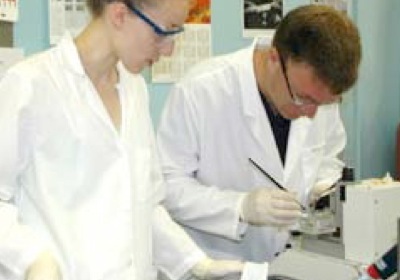
1.Sectioning brain tissue
-
2.Lighthouse near Tiverton
-
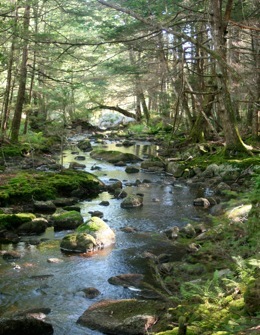
3.Mersey-Tobeatic watershed